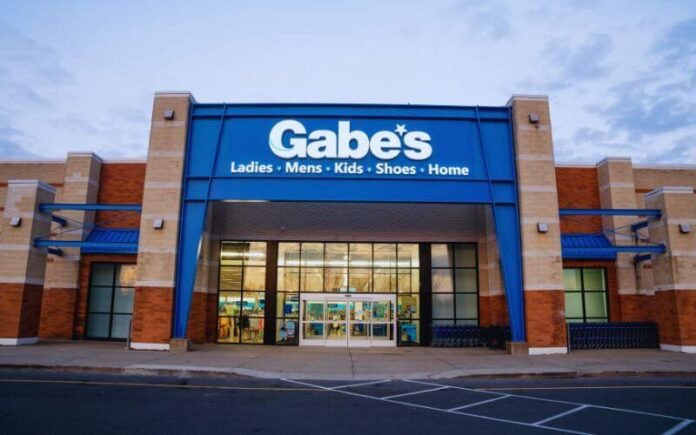
Seeing a “Store Closing” sign at your local Gabe’s is understandably alarming. But before you assume the whole chain is shutting down, it’s worth slowing down and looking at what’s actually happening. The answer depends on understanding the difference between a company that’s struggling, one that has restructured, and one that’s actually liquidating.
Here’s a clear breakdown of where Gabe’s stands right now, what the 2023 restructuring actually changed, what credit agencies are flagging, and what you should do if you have gift cards or store credit.
Gabe’s Is Still Open But Its Financial History Is Complicated
Let’s answer the main question directly: Gabe’s has not filed for Chapter 11 or Chapter 7 bankruptcy as of the latest reporting. The company completed an out-of-court restructuring in 2023 that allowed it to avoid a bankruptcy filing entirely.
As of 2024, Gabe’s (formally known as Gabriel Brothers, Inc.) operates 131 stores plus 34 Old Time Pottery locations across 20 states. The chain is actively running stores, maintaining its website, and promoting deals. That is not what a company in liquidation looks like.
That said, its financial position remains fragile. The company has real debt problems, and credit agencies have raised serious concerns. “Still open” and “completely stable” are two very different things.
What the 2023 Restructuring Actually Changed
Here’s what “out-of-court restructuring” actually means for Gabe’s in plain terms.
Gabe’s was carrying a level of debt it couldn’t comfortably manage. Rather than file for bankruptcy, the company negotiated directly with its lenders. A group of existing term lenders Brigade Capital Management, Arbour Lane Capital Management, and Anchorage Capital Advisors agreed to convert more than 75% of Gabe’s outstanding term loan debt into equity. In doing so, they effectively took ownership of the company from private equity firm Warburg Pincus.
The restructuring also reduced Gabe’s debt by roughly $115 million and brought in approximately $55 million in new capital to fund day-to-day operations. Asset-based lending from Second Avenue Capital Partners and Ares Credit funds continues to support working capital.
Think of it like this: imagine a homeowner who can’t make their mortgage payments. Instead of foreclosing, the bank agrees to take partial ownership of the house. The homeowner stays in place, but on different terms. That’s roughly what happened here.
This type of deal keeps a company out of bankruptcy court, but it doesn’t guarantee long-term stability. It buys time and reduces the immediate debt burden. Whether the business can improve its performance in that window is a separate question entirely.
What Credit Agencies Say And What It Actually Means
You may have seen headlines citing Fitch, Moody’s, or S&P Global using phrases like “unsustainable capital structure” or “high bankruptcy risk.” Those phrases sound severe, and they are serious but they don’t mean Gabe’s is closing tomorrow.
Fitch placed Gabe’s parent company in a “Top Tier (Tier 1) Market Concern” category. Companies in that group are expected to default within two years, with many defaulting within 12 months. S&P, writing after the restructuring in late 2023, stated that Gabe’s capital structure remains unsustainable and that default scenarios are conceivable within 12 months due to liquidity constraints.
Here’s the key distinction: a credit agency flagging high default risk is a probability assessment, not a confirmed event. It means the company is under serious financial pressure. It does not mean closure is certain or that it’s happening right now.
A useful way to think about it: a doctor telling a patient they are high-risk for a heart attack is not the same as saying they are having one. The warning is real and worth taking seriously, but it’s not a diagnosis of something that’s already happened.
Local Store Closures vs. the Whole Chain Shutting Down
This is where a lot of the confusion comes from. When a specific Gabe’s location announces it’s closing, shoppers in that area naturally wonder if the entire chain is collapsing. In most cases, that’s not what’s happening.
Take the Gabe’s in Franklin, Tennessee, on Cool Springs Boulevard. That store announced it was closing after nearly seven years, with its last day set for May 18. Shoppers saw storewide discounts and “closing” signage the kind of thing that looks like a shutdown.
But the closing announcement itself pointed customers to nearby Gabe’s locations in Madison and Murfreesboro. That’s not what a company-wide liquidation looks like. That’s a retailer trimming locations that aren’t performing while keeping the broader network running.
Retail chains close individual stores all the time without going out of business. It’s called store footprint optimization closing weaker locations to focus resources on better-performing ones. Frustrating if your local store is closing, but different from a full chain collapse.
Warning Signs Worth Watching At Your Local Store
If you want to monitor whether your specific Gabe’s location or the chain overall is heading toward deeper trouble, here are practical signs to watch for:
- Noticeably thinner inventory. Racks that are half-empty or product categories that disappear entirely.
- Deeper, more frequent clearance events. Markdown cycles that feel more like liquidation than normal seasonal sales.
- Reduced staffing. Fewer employees on the floor, longer waits, or closed checkout lanes.
- Declining store upkeep. Less cleaning, maintenance issues going unaddressed, or general neglect.
These signs don’t confirm a shutdown is coming, but they do indicate a store or chain under financial stress. If you’re seeing several of these at once, it’s worth paying attention.
Practical Steps If You Have Gift Cards or Store Credit
This is one of the most practical concerns for shoppers. Here’s what you should know.
Gift cards are generally valid and redeemable while a retailer is still operating normally. The problem arises if the company files for bankruptcy and a court sets a specific bar date, after which unused gift cards may become worthless. The same applies to store credit and loyalty points.
Given Gabe’s current financial uncertainty, here are some sensible steps:
- Use your gift cards soon. Don’t sit on them for months. If you have Gabe’s credit, spend it on something you actually need in the near term.
- Avoid stacking up more gift cards. Now isn’t the time to buy Gabe’s gift cards as presents or future-use items.
- Know the return policy before big purchases. Return windows and policies can change quickly if a company enters Chapter 11, so keep receipts and don’t assume you’ll have the same flexibility in a few months that you do today.
- Skip large non-product commitments. If Gabe’s were to offer any kind of multi-year or prepaid program, this would not be the time to commit to one.
None of this is specific financial advice just common-sense risk management when shopping at a retailer with a complicated balance sheet.
How Gabe’s Fits Into the Bigger Picture of Off-Price Retail
Off-price retailers think TJ Maxx, Marshalls, Ross, Burlington tend to do well when consumers are looking to stretch their budgets. That’s been the case during recent inflationary periods. So why is Gabe’s struggling while the broader category is doing fine?
Scale and capital structure matter enormously in retail. Gabe’s is a regional chain with 131 locations, not a national giant with thousands of stores and deep access to capital markets. When a regional chain carries too much debt, the same financial pressure that a larger retailer can absorb becomes genuinely threatening.
The category being healthy doesn’t mean every company in it is. Individual chains still live or die based on their own operations, debt loads, and management decisions.
For more context on how businesses manage financial stress and restructuring, Smart Business Wire covers these topics in plain language for business owners and professionals.
The Bottom Line on Gabe’s Right Now
Gabe’s is not going out of business today. It completed a major debt restructuring in 2023, brought in new capital, and is still operating over 130 stores across 20 states. Individual store closures are happening, but they reflect network adjustments not a full chain collapse.
At the same time, the financial risk is real. Multiple credit agencies have flagged serious concerns, and the company’s capital structure has been described as unsustainable. The restructuring bought time, not a clean bill of health.
The honest answer to “Is Gabe’s going out of business?” is: not right now, but it’s under genuine financial stress and the situation bears watching. If you’re a regular shopper, use your gift cards, keep your receipts, and monitor your local store for the warning signs listed above. And stay current this is the kind of situation that can change.
Also Read: